| Celebrating 40 Years of Excellence in Dental Care – Thank You for Your Continued Trust and Support! |
When Should My Child First See a Lakewood Orthodontist?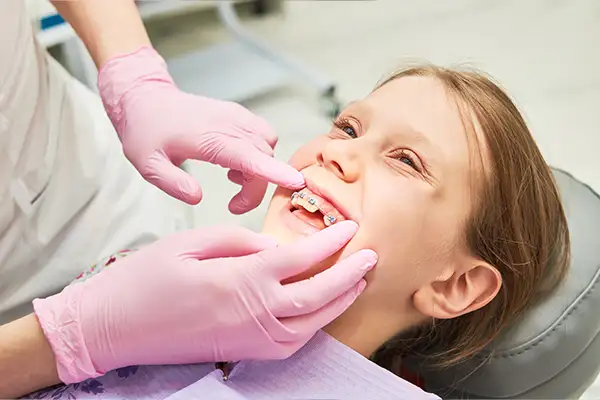 Many parents assume orthodontic care doesn't come into play until a child's teeth are fully in, somewhere around the early teenage years. Many parents assume orthodontic care doesn't come into play until a child's teeth are fully in, somewhere around the early teenage years. In reality, the first orthodontist visit typically happens much sooner, often while a child still has a mouth full of baby teeth. Lakewood Dental Arts welcomes new patients for early orthodontic evaluations and can walk you through what, if anything, comes next. Call (562) 384-1091 to schedule an appointment! When Should a Child First See an Orthodontist?The American Association of Orthodontists recommends that children have their first orthodontic evaluation by age seven. At this point, the first permanent molars and incisors have usually come in, giving an orthodontist enough information to assess how the bite is developing and whether the jaw is growing as expected. An evaluation at this age doesn't mean treatment starts immediately. Many children are simply monitored over time, with the orthodontist checking in periodically as more permanent teeth erupt. For others, certain issues respond better to intervention while the jaw is still growing, so identifying them early opens up treatment options that aren't available once growth has slowed. Signs My Child Needs BracesParents are often the first to notice something that warrants a closer look. A few common signs worth bringing to the orthodontist's attention include:
Not every child with one of these signs needs treatment right away, and some resolve on their own as more teeth come in. But a professional evaluation is the only reliable way to know whether a wait-and-watch approach is appropriate or whether a specific issue would benefit from earlier attention. What Happens During the First Visit?A first orthodontic visit is generally straightforward and low-pressure. The dentist will examine the teeth, jaw, and bite, and may take X-rays to see how permanent teeth are positioned beneath the gum line. This gives a full picture of how the mouth is developing, not just what's visible on the surface. From there, the visit usually ends in one of two ways. If no immediate concerns are found, the child is placed on a monitoring schedule, with follow-up visits spaced out over time as growth continues. If an issue is identified that would benefit from early attention, such as a narrow palate, a significant bite misalignment, or a habit affecting tooth position, options for addressing it will be discussed at that point. Why Timing MattersJawbones respond differently to guidance during childhood than they do later on. Certain problems, like a crossbite or a jaw that's growing asymmetrically, are far easier to influence while a child is still growing. Waiting until all permanent teeth have erupted can mean fewer options and, in some cases, a longer road to correction. That doesn't mean every child needs early treatment. Many will simply be observed until they're ready for comprehensive orthodontic care in their early teenage years. The value of an early evaluation is in having that information on hand rather than waiting until options have narrowed. Finding a Pediatric Orthodontist in LakewoodFor families in the area, choosing a pediatric orthodontist in Lakewood who works specifically with growing smiles makes the process easier to navigate. Children respond differently to dental visits than adults, and a practice experienced in pediatric care knows how to make the exam comfortable while still gathering the information needed to guide next steps. If your child is approaching age seven, or if you've noticed any of the signs above, scheduling a first orthodontist visit is a simple way to get clear answers. |
Contact Us |